SYMPTOMS OF DRAMA MODERNITY


Original Title in Croatian: Kazalište suigre. Gavelling doprinos teoriji (2001). Antibarbarus: Zagreb. Theatre of Interplay is a book focusing on a previously undiscovered aspect of the work of Branko Gavella, a famous Croatian theatre director and acting pedagogue. Key words: theatre, acting, analysis, structure, aesthetic function, aesthetic value, aesthetic object, reception, dramaturgical formula, intention, interplay, norm, normative value, style, sign, etc.

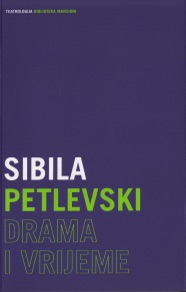
DRAMA AND TIME. Theatre studies and criticism
Original Title in Croatian: Drama i vrijeme (2007). ITI-Unesco: Zagreb. Drama and Time is a book in the genre of theatre studies. Key words: drama, performance, performing, witnessing, time, avant-guardisms, anachronisms, dramaturgy of utopia, expressionism, libretto, small form, acting, Croatian dramatic literature, Croatian contemporary theatre scene.
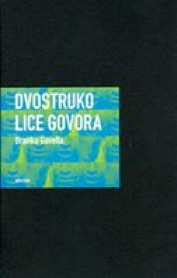
Branko Gavella. DOUBLE FACE OF SPEECH (ed. by S. Petlevski)
Original Title in Croatian: Branko Gavella. Dvostruko lice govora (2005) CDU: Zagreb. Branko Gavella. Double Face of Speech is a choice of Gavella’s work from 1910 to 1950 with Petlevski’s “Introductory Study on Gavella’s Search for the Methodology of Cultural History”.
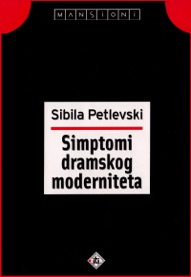
Original Title: Simptomi dramskog moderniteta
Symptoms of Drama Modernity is a comparative and theatrological study based on an insight into the drama texts of authors of Croatian Literary Modernism (Dečak, Kamov, Kulundžić, Donadini, Kosor, Ogrizović, Milčinović, Krleža). Starting out from the culturological category of Modernism as a concept that covers a specific period characterised by a permeation of diverse media stimuli, the author treats eleven plays from the period. Eight Croatian drama texts, one Austrian, one German and one Slovenian, and a Croatian-Czech-German interfusion serve as typological samples for research into symptoms of the Modern and thereby place them in the context of Central European Modernism. A Chronology is added to contrasting analyses and covers events on the European cultural scene between 1885 and 1917, years defined in critical and historical literature as the boundaries of the Modernism period. Seeking for the symptoms of Modernity in Croatian literature is designated as one step nearer to the typology of Modernism, a very significant period in contemporary Croatian literature.
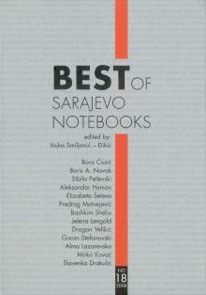
The Best of Sarajevo Notebooks
The edition includes the best excerpts from the regional magazine on literature, Sarajevo Notebooks, which has come out in Sarajevo since 2002, uniting literatures of authors from the former Yugoslavia. With contributions of Bora Ćosić, Boris A. Novak, Sibila Petlevski, Aleksandar Hemon, Elizabeta Šeleva, Predrag Matvejević, Bashkim Shehu, Jelena Lengold, Dragan Velikić, Goran Stefanovski, Alma Lazarevska, Mirko Kovač and Slavenka Drakulić. Edited by: Vojka Smiljanić-Đikić
"This magazine reestablishes interrupted ties and dialogue among culture institutions and most significant regional authors. Sarajevo Notebooks has become a place of cooperation, mutuality, creative dialogue", reads the press release.
Publisher: Mediacentar Sarajevo

LITERARY SEARCH FOR LOST TRUTH AND IDENTITY;
an autopoetic essay
(Original title:
“Književna potraga za izgubljenom istinom i identitetom”)
by Sibila Petlevski
Source:
Sarajevo Notebooks (Sarajevske Sveske), issue: 03-2003, pages: 3754,
free pdf download
on www.ceeol.com.
SMALL FORM IN THE CROATIAN DRAMA
by Sibila Petlevski
Institut d'études slaves;
Centre d'études slaves
Identifier
ISSN : 0080-2557
Source: Revue des études slaves (Paris) Y. 2006, vol. 77, No. 1-2,
pages 43-54 [12 pages]
Language: English





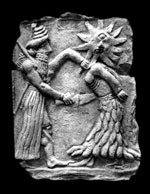
VIOLENCE IN ARTS: PERFORMING AS WITNESSING by Sibila Petlevski

THEATRE OF SHAME: IDENTITY AS WITNESSING by Sibila Petlevski
Croatian Political Science Review, Vol.46 No.4 April 2010.

“Branko Gavella: The Director as Thinker”
by Sibila Petlevski. In: History of the Literary Cultures of East-Central Europe
Junctures and disjunctures in the 19th and 20th centuries
Volume III: The making and remaking of literary institutions
Edited by Marcel Cornis-Pope and John Neubauer

SPIN-OFF. AN ANTHOLOGY OF RECENT AMERICAN POETRY.
Original title in Croatian: Spin-off. Antologija novijeg američkog pjesništva (1991). Nakladni zavod Matice hrvatske: Zagreb (edited, selected, translated and critically commented by S. Petlevski)
Included poets: Stephen Dobyns, Reginald Gibbons, Albert Goldbarth, Jorie Graham, Kerry Shawn keys, david Shapiro, James Tate, Anne Waldman, lewis Warsh, Elaine Equi, Harrison Fisher, Henry Kanabus, Steven Lavoie, Jerome Sala, Paul Violi, Alain Bernheimer, Charles Bernstein, Kit Robinson, Stephen RodeferMichael Brownstein, Tom Clark, Louis Glueck, Darrell Gray, Edward Hirsh, Larry Levis, Thomas Lux, John Matthias, Gregory Orr, Ron Padgett.
ON MEMORY PROCESSES IN ACTING THEORY
by Sibila Petlevski
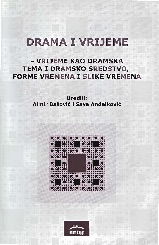
Sibila Petevski (2010). “Postavljanje vremena na scenu”. In: Drama i vrijeme - vrijeme kao dramska tema i dramsko sredstvo, forme vremena i slike vremena. Eds. A. Bašović & S. Anđelković. Sarajevo: Dobra knjiga. Pp, 177-191.
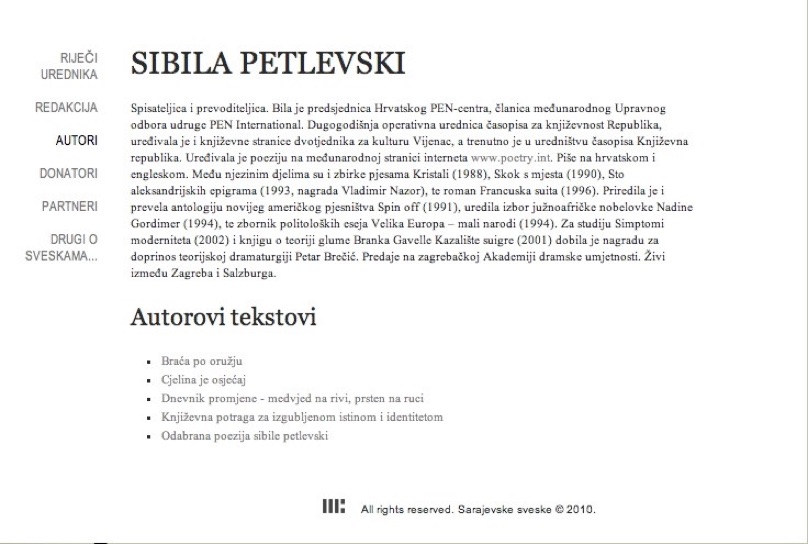
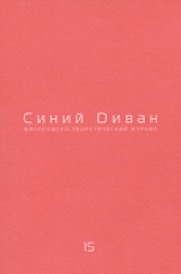
Sinii divan : filosofsko-teoreticheskii zhurnal.
Philosophical and theoretical journal. Issue 15, Moscow 2005
Философско-теоретический журнал «СИНИЙ ДИВАН» № 15
«Синий диван» – философско-теоретический журнал, создающий условия для диалога между российскими и западными интеллектуалами по широкому кругу актуальных проблем. Одна из основных задач издания – по существу, образовательная. Она состоит в формировании такой общегуманитарной среды, которая позволила бы соединить усилия представителям различных школ и дисциплин. Сквозной темой 15-го номера «Синего дивана» стали вампиры как один из главнейших мифов эпохи масс-медиа. Именно поэтому авторы уделяют первостепенное внимание кино. Впрочем, фигура «неумершего» играет свою особую роль в геополитической, экономической и даже медицинской сферах. Расширительное толкование проблемы позволяет говорить о «призрачной истории» (она не пишется, но вытесняется), равно как и о том, что переливание крови – это способ воплотить социалистический идеал в настоящем (согласно А. Богданову). «Призрак» – это также излюбленная фигура деконструктивной философии Жака Деррида. В номере публикуется окончание семинара Деррида «Тварь и суверен» и препринт одной из лекций М.К. Мамардашвили из цикла «Беседы о мышлении». Номер завершается большим рецензионным блоком.
Немаловажная часть содержания номера отведена представлению современных философских текстов Жака Деррида, Мераба Мамардашвили и Сибиллы Петлевски.
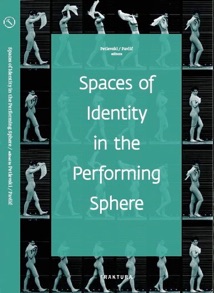
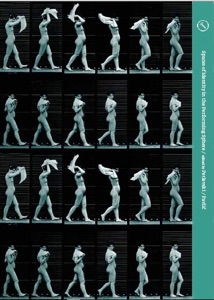
SPACES OF IDENTITY IN THE PERFORMING SPHERE. Fraktura, Zaprešić 2011. Editors / Sibila Petlevski, Goran Pavlić
The conference “Spaces of Identity in the Performing Sphere” took place in Zagreb, 11th – 14th February 2010, as the central stage of the multi-annual project “Discursive Identity in the Performing Arts: Bodies, Personae, Intersubjects”. The project’s main aim is to set the foundations of an interdisciplinary field of research that could grasp the phenomenon of discursive subjectivation in performing arts, and its final output – discursive identity in the performing sphere. Unlike the already existing approaches, predominantly focused on a single aspect of this multi-faceted problem, and with traditionally strict methodological procedures, a particular feature of our critical enterprise is its radical transdisciplinarity. It does not consist only in gathering various disciplines under the vague concept of interdisciplinarity; rather, it tries to conceptualize the so far insufficiently studied issues emerging from the field of performance theory as well as performing arts into a coherent and systematic approach. More precisely, the problems of subjectivation in the very process of creating a performing act tend to elude scrupulous and consistent theoretical account. There can be multiple reasons for such a situation, but we find that the structural one is the most important. When dealing with the problem of identity from the viewpoint of a particular discipline, or paradigm, one is methodologically forced to reflect upon the chosen matter within chosen discipline’s boundaries. Performing identity essentially evades such attempts, since it appears on the very intersection of historical, social, cultural, spatial and physiological conditions (to name the most important ones). Constituted in such a way, it can’t be fully comprehended from particular perspectives. In order to
achieve such a task, a two-stage project is needed. First, the analysis of identity formation in various fields of human praxis is to be examined. On the next level, the results from undertaken research are to be employed in conceiving of a theoretical synthesis capable of dealing with performing identity as an autonomous and distinctive phenomenon. Such a venture is thought of as New Theatrology.

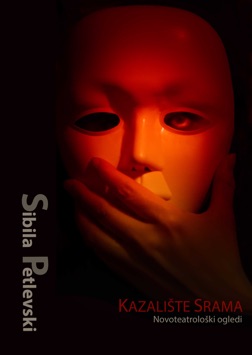
The book carrying a suggestive title Theatre of Shame has a special place in the literary and scientific opus of Sibila Petlevski, a versatile author, who exhibited her prowess in all genres of literature – from fictional and historical narrative, across poetry and drama, to critical studies in theatre and performance studies, and who has been awarded for her contribution to each of the aforementioned genres and fields of research. Petlevski based her essays on many years of meticulous research, counterbalancing scientific rigor to the invocation of intellectual and literary freedom. The unique value of this book is in the author’s bold decision to show that the writing itself opens up an unexpectedly wide space for performance. The performative dimension of this book lies in the methodological, stylistic and thematic choices made by this author who refuses and supersedes the deeply entrenched division of labor, that “apartheid of knowledges” for which Dwight Conquergood once said that it “plays out inside the academy as the difference between thinking and doing, interpreting and making, conceptualization and creativity”.







Beyond Identity: the Dynamic Self at the Intersection of Performance Philosophy and the Philosophy of Science
Sibila Petlevski ; University of Zagreb – Academy of Dramatic Art